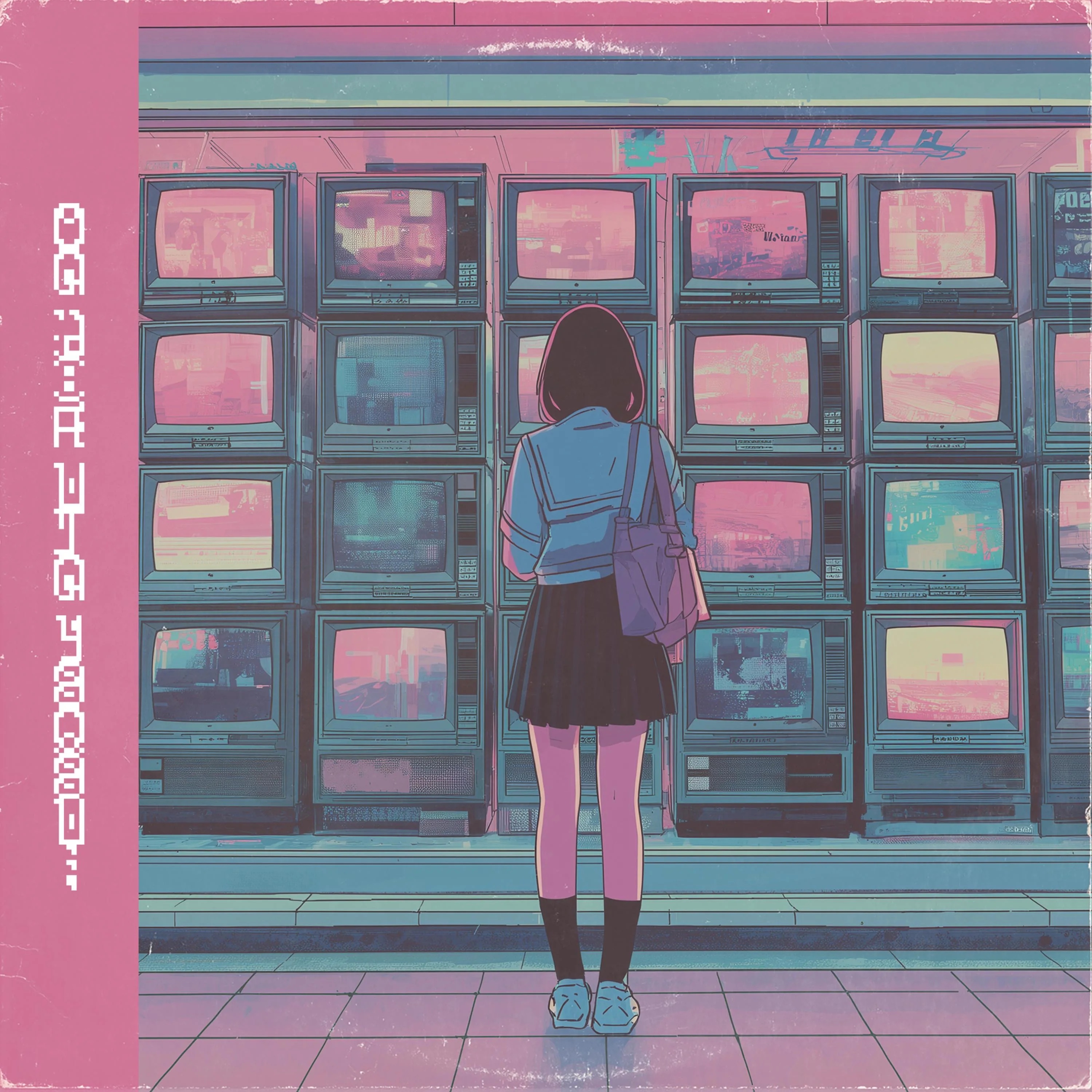
A VHS tape remembers every time it has been played.
The picture softens. The sound picks up a little dust. A familiar moment may wobble near the edge of the screen because somebody paused it too often years ago. Unlike a perfect digital file, the object changes as people use it. That damage can make it feel more personal rather than less.
VHS Collection uses that physical world to tell a story about love, memory and old media. The original Wave 2 track is full of movement through video-store culture, shelves, cases and films that became attached to specific people and evenings.
VHS Collection (Rewind Version) turns the tape back. The same central story returns from a softer distance, with more attention on static, repetition and the strange experience of recovering a moment that cannot truly be replayed.
What is VHS Collection about?
On the surface, it is a nostalgic song about physical tapes and the era around them. But a collection is never only a set of objects. It is a map of taste, habit and history. Every battered case says that somebody chose this film, carried it home and made room for it on a shelf.
That makes a VHS collection a natural setting for romance. Films become shared language. Quoted lines turn into private jokes. A particular title stops belonging only to its actors and begins to belong to the people who watched it together.
When a relationship changes, those objects remain. A tape can hold the memory of a person without knowing they are gone. The film plays exactly as it did before, while the room around it has become completely different.
Why call it the Rewind Version?
Rewinding is practical, but it is also symbolic. It is the impossible wish hidden inside nostalgia: take me back to the beginning, before I knew how the scene would end.
The phrase belongs especially well to VHS because rewinding took time. The machine made noise. The tape physically moved. Returning to the start was an action rather than an instant jump on a progress bar. You could hear the past being pulled back into place.
The Rewind Version leans into that feeling. It treats the song less like a bright display of references and more like a tape discovered after years in storage. The edges are emotionally softer. The memory feels handled, replayed and slightly unreliable.
The official release clips—VHS Collection, stripped back, Back to the static and Give me back my VHS Collection—all point toward the same idea. The attraction is not just the format. It is the life that seems to be stored inside it.
Why imperfect media can feel more human
Digital restoration often aims to remove noise, grain and damage. Technically, that gives us a clearer image. Emotionally, though, the imperfections can be part of what we recognise.
Tape hiss means the object has a body. Tracking lines remind us that playback is happening through machinery. A handwritten label tells us somebody cared enough to record or keep what was inside. These details interrupt the illusion of perfect access and make the act of watching visible.
Relationships are like that too. The moments people treasure are rarely flawless masters. They are misremembered conversations, repeated stories, damaged photographs and ordinary evenings that gained meaning later. The noise does not always hide the memory. Sometimes the noise proves it was lived.
The difference between replaying and returning
A film can be replayed. A time in your life cannot. That difference gives VHS Collection its ache.
You can find the same title, hear the opening music and sit in a room arranged to resemble the past. Yet the person watching has changed. Memory adds scenes, removes details and edits the emotional ending. Rewinding is possible for the tape but not for the viewer.
The song does not treat that as a reason to throw the collection away. Keeping an object is not the same as refusing to move forward. Sometimes physical media gives memory a safe address. You can visit it without having to live there.
That distinction matters throughout Echoes. The release looks backward, but it does not ask listeners to become trapped there. Rewinding is temporary. Eventually the tape reaches the beginning, the machine clicks, and you decide whether to press play again.
Where it sits on Wave 2: Echoes
Within Wave 2: Echoes, Rewind follows songs about childhood television and life beyond the feed. It acts like the EP’s physical archive: a place where old stories can be touched, replayed and heard with their imperfections intact.
For the full effect, begin with the original VHS Collection, then play the Rewind Version. The first opens the collection; the second asks what you were really hoping to recover.
Listen to Wave 2: Echoes, explore the complete discography, and watch more visual stories on the official videos page. Physical music and merch are available through the official music collection, or you can join the signal for a free bonus song.