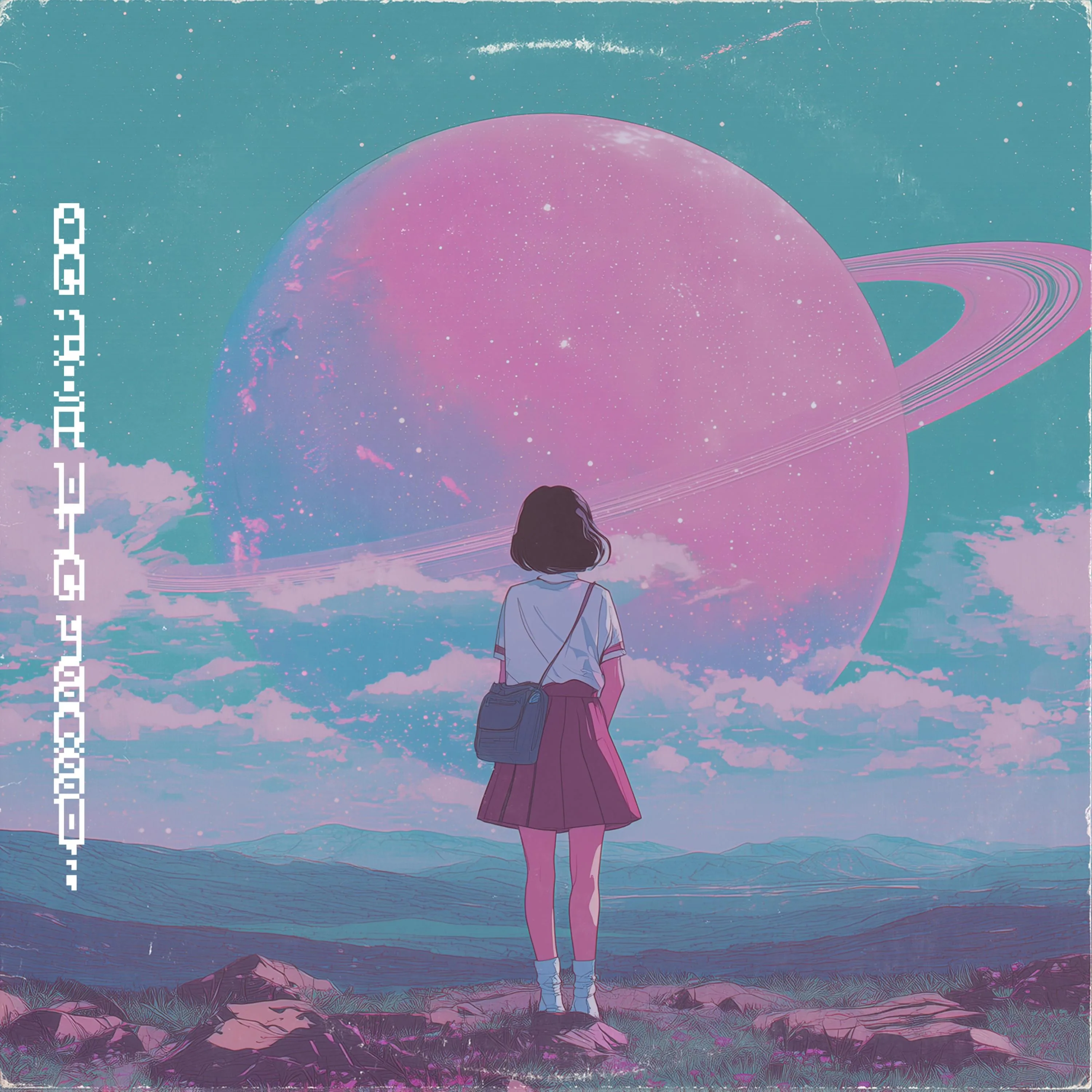
Wave 2: Echoes began with a simple question: what happens when a song reaches the end, but the feeling inside it keeps moving?
Wave 2 was built to arrive brightly. Its songs are full of movement: guitars pushing forward, synths glowing around the edges, and stories told through school corridors, television screens, old tapes, games and the strange speed of growing up. But loud songs often hide quieter rooms inside them. Once the album existed, those rooms became hard to ignore.
That is where Wave 2: Echoes lives. It is not a replacement for the original album and it is not simply a collection of acoustic extras. It is a six-song companion EP that turns familiar stories slightly and lets the light fall across them from another direction.
Why call it Echoes?
An echo is recognisable, but it never returns in exactly the same shape. Distance changes it. The room changes it. Time changes it. That idea connects these six versions more than any one instrument or production trick.
7 Evil Exes (Final Boss Version) makes the fight feel larger and closer to its endgame. Saturday Morning Cartoons (5AM Version) moves into the blue-grey hour before the rest of the house wakes up. More Than Pixels (Acoustic Version) clears away some of the digital noise around a song about looking up from the screen. VHS Collection (Rewind Version) leans into the blur and static of analogue memory. Yearbook (After School Version) stays behind after the final bell. College (Graduate Version) looks back from the other side of the cap toss.
The lyrics and central stories remain connected to Wave 2. What changes is the emotional distance. A line that felt immediate in the original can feel like a memory here. A joke can reveal a bruise underneath it. A nostalgic image can stop being decoration and become the whole point.
Six songs, six different kinds of memory
The EP follows a loose journey through growing up. It starts in exaggerated game logic, where love becomes a series of battles and every previous relationship is another boss to defeat. Then it moves backward into childhood television, outward into life beyond the feed, through shelves of fading physical media, along empty school corridors, and finally beyond college.
That movement matters because nostalgia is not only about wanting old things back. Sometimes it is about understanding why they still have power over us. Saturday morning cartoons were never just cartoons. They were anticipation, cereal bowls, quiet houses and a whole weekend that had not happened yet. A VHS tape was never only an inconvenient way to watch a film. It was a physical object that could be borrowed, rewound, damaged, kept and rediscovered.
A yearbook is full of tiny promises written as if distance will never happen. College is sold as the opening chapter of adult life, even though it can also be the place where people begin moving toward different versions of themselves. These objects and places become emotional storage. The songs use them because they are specific enough to feel real and open enough for listeners to place their own memories inside.
How the new versions change the meaning
The meaning of a song is never held by lyrics alone. Tempo, space, texture and arrangement decide how close the listener stands to the story. A full, energetic production can make a difficult idea feel survivable because the song keeps moving. A quieter arrangement can remove that protection.
That contrast sits at the centre of Wave 2: Echoes. The versions do not announce one fixed interpretation. Instead, they reveal possibilities that were already inside the originals. More Than Pixels becomes less like advice shouted across a busy room and more like a direct conversation. Yearbook feels less like a snapshot of school and more like opening the book years later. College gains the unavoidable perspective contained in the word “graduate”: this chapter has ended, whether everyone was ready or not.
The official Wave 2: Echoes preview introduced the release as six alternative versions. Together, though, they form something more coherent than a set of alternates. They sound like the after-image left by Wave 2 once the rush has passed.
Where to start
If you want the clearest contrast, begin with an original and its Echoes counterpart. Play More Than Pixels, then move directly into the Acoustic Version. Or listen to Saturday Morning Cartoons before entering the quieter 5AM version. Hearing the same story in two different frames is the key to the EP.
If you prefer to experience it as one complete release, start at the final boss and let the tracklist carry you toward graduation. The order moves from fantasy combat toward real-world distance, ending with the kind of goodbye that only becomes clear once you are already looking back.
Listen to Wave 2: Echoes, explore the complete ME & The Robots discography, or watch the related clips on the official videos page. If these songs feel like part of your own history, you can also unlock a free bonus song and join the signal or browse music and physical releases.